
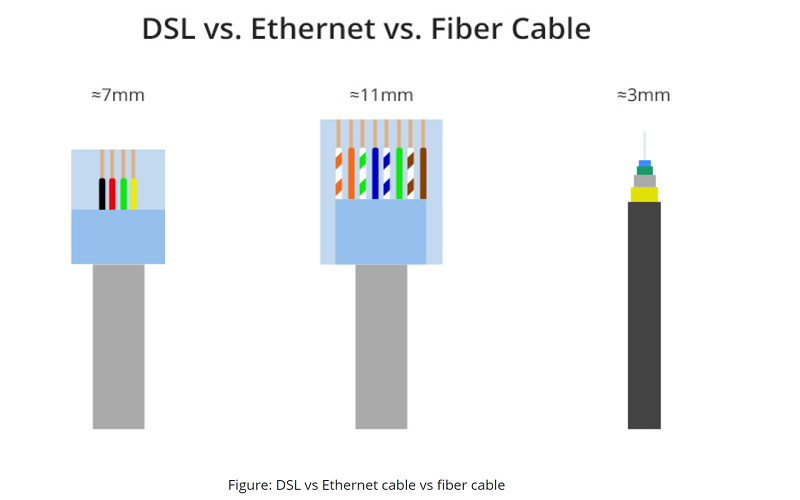
DSL vs. Cable vs. Fiber: Understanding the Differences
In today’s always-connected world, choosing the right internet service is essential. Whether you’re working from home, streaming shows, gaming online, or just browsing, your internet connection plays a critical role in your daily life. But with so many options available, it’s easy to get confused—especially when comparing DSL, cable, and fiber internet.
Each of these technologies comes with its own set of strengths and limitations. In this guide, we’ll break down the differences between DSL, cable, and fiber internet to help you make an informed decision about which one is best suited for your needs.
1. What is DSL Internet?
DSL (Digital Subscriber Line) internet is one of the oldest forms of high-speed internet access. It uses the existing copper telephone lines in your home to transmit data.
How It Works:
DSL sends digital data over traditional phone lines but operates at a different frequency than voice calls, allowing you to use the phone and internet simultaneously.
Speed Range:
Download speeds typically range from 5 Mbps to 100 Mbps, depending on your provider and how close you are to the central office.
Pros of DSL:
- Widespread availability – DSL is accessible in many rural and suburban areas.
- Affordable – It’s often one of the most budget-friendly options.
- No special wiring – Uses existing telephone infrastructure.
Cons of DSL:
- Speed drops with distance – The farther you are from the provider’s central hub, the slower your speeds.
- Limited speeds – Not ideal for heavy users or multiple-device households.
- Outdated technology – Being replaced in many areas by newer options.
2. What is Cable Internet?
Cable internet uses the same coaxial cables that deliver cable TV. It’s a popular option in urban and suburban neighborhoods due to its relatively high speeds and broad availability.
How It Works:
Data is transmitted through coaxial cables, which are capable of handling higher bandwidth compared to DSL lines. You typically share the connection with other users in your neighborhood.
Speed Range:
Cable internet offers speeds ranging from 50 Mbps to 1 Gbps, depending on the provider and location.
Pros of Cable:
- Faster than DSL – Suitable for HD streaming, video conferencing, and online gaming.
- Wide coverage – Common in both cities and suburbs.
- Bundles available – Often offered with cable TV packages for cost savings.
Cons of Cable:
- Shared bandwidth – Speeds can slow down during peak usage times.
- Higher cost – Generally more expensive than DSL.
- Not available everywhere – Some rural areas lack cable infrastructure.
3. What is Fiber Internet?
Fiber-optic internet is the most advanced option available today. It uses thin strands of glass or plastic to transmit data at the speed of light.
How It Works:
Instead of using electrical signals like DSL or cable, fiber uses light to send data, resulting in ultra-fast and consistent speeds.
Speed Range:
Fiber offers speeds up to 1 Gbps or even 10 Gbps in some areas—both download and upload.
Pros of Fiber:
- Blazing fast speeds – Perfect for large households, gamers, remote workers, and content creators.
- Low latency – Ideal for real-time applications like video calls and online gaming.
- Symmetrical speeds – Upload and download speeds are the same.
- Reliable and future-proof – Less prone to outages and signal degradation.
Cons of Fiber:
- Limited availability – Not yet available in many rural or suburban areas.
- Higher installation costs – Especially in areas where fiber infrastructure doesn’t already exist.
- Monthly fees can be higher – Though prices are gradually decreasing.
4. Side-by-Side Feature Comparison
Let’s break down how DSL, cable, and fiber compare in key performance areas:
- Speed:
Fiber is the clear winner, offering gigabit speeds that dwarf the capabilities of both DSL and cable. Cable is faster than DSL but can’t match fiber’s performance. - Reliability:
Fiber offers the most consistent performance, even during peak hours. Cable can suffer from speed drops when many users are online, while DSL’s performance degrades with distance. - Latency:
Low latency is essential for applications like gaming or video conferencing. Fiber again leads the pack, with cable in second and DSL lagging behind. - Availability:
DSL is widely available—even in rural areas—because it uses phone lines. Cable is available in most urban and suburban locations. Fiber is expanding, but still not as widely accessible. - Cost:
DSL tends to be the cheapest, followed by cable, with fiber typically being the most expensive—though prices can vary based on your provider and area.
5. Which One is Right for You?
The best internet connection for you depends on your needs, location, and budget. Here’s a quick breakdown of who each option might suit best:
Choose DSL if:
- You live in a rural or remote area.
- You’re looking for a budget-friendly option.
- Your internet usage is light—browsing, email, and occasional streaming.
Choose Cable if:
- You live in an urban or suburban area.
- You need faster speeds for streaming, gaming, or multiple devices.
- You want to bundle TV and internet services.
Choose Fiber if:
- You’re a heavy internet user or work from home.
- You need top-tier performance and low latency.
- Fiber is available in your area, and you’re willing to pay a bit more for premium speed and reliability.
6. What About Futureproofing?
As more devices become connected and as we move into a world of smart homes, 4K/8K streaming, and virtual reality, the demand for high-speed internet will only grow. While DSL and cable may meet current needs, fiber is built for the future.
Even if you don’t need gigabit speeds today, choosing a fiber provider (if available) ensures that your connection can scale with your needs in the years to come.
Conclusion: Making the Smart Choice
Understanding the differences between DSL, cable, and fiber internet helps you make the best choice for your household or business. If you just need basic internet at a low cost, DSL might work. If you want solid speeds for entertainment and multiple users, cable is a great option. But if you’re looking for the fastest, most reliable connection that can handle anything you throw at it—fiber is the clear winner.
Before making a final decision, check what’s available in your area, compare providers, read customer reviews, and consider your usage habits. The right internet connection can dramatically improve your productivity, entertainment experience, and peace of mind.